

The UN is sounding the alarm over Myanmar’s planned late-December elections, warning that the vote is being engineered under military control in an environment defined by fear, violence, and extreme political repression.
According to UN Human Rights Office (OHCHR) spokesperson Jeremy Laurence, voting set for 28 December will take place under conditions “rife with threats and violence,” where genuine political participation is actively suppressed.
Since the 2021 coup, more than 30,000 political opponents, including elected leaders, parliamentarians, and activists, have been detained.
Rather than restoring democratic rule, OHCHR warns that the process will intensify insecurity, fear, and polarisation across the country. Their priority, they say, remains halting violence and ensuring humanitarian access—which the military continues to obstruct.
Civilians Trapped Between Pressure and Fear
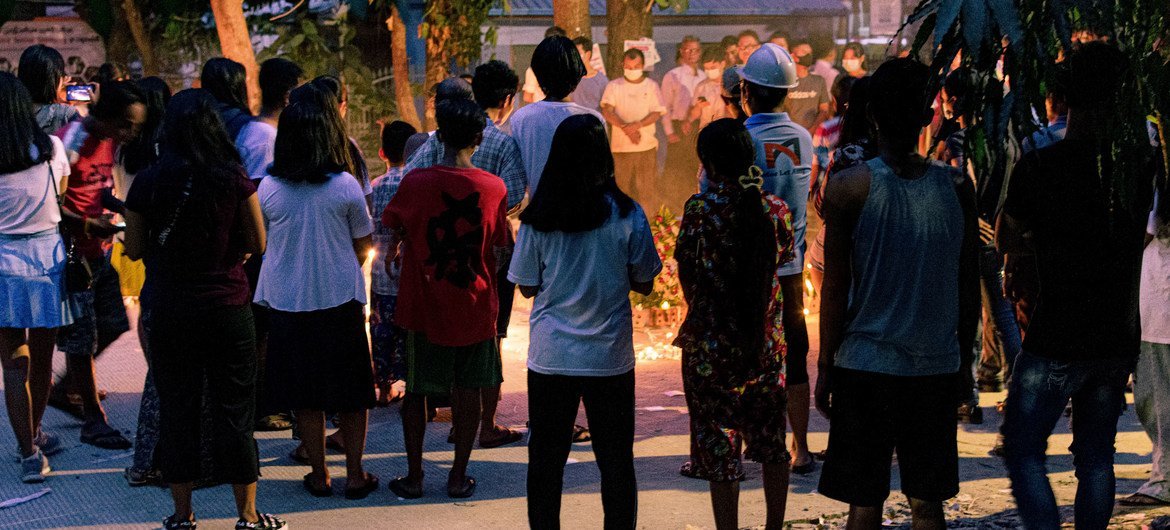
Speaking from Bangkok, James Rodehaver, head of OHCHR’s Myanmar team, described an atmosphere where civilians are caught between military coercion to vote and armed opposition groups urging them not to participate.
The junta claims it has issued 4,000 pardons, but UN monitoring shows that fewer than 15% of those released have actually been seen leaving detention—and some were rearrested shortly after. Meanwhile, more than 100 new arrests have been made under new election-related “protection rules.”
OHCHR also verified cases such as three youths sentenced to 49 years simply for putting up posters depicting a ballot box pierced by a bullet.
AI Surveillance and Electronic-Only Voting
UN officials expressed deep concern about the military’s introduction of electronic-only voting, paired with expanded surveillance systems using AI and biometric tracking.
These measures, they warn, may further destroy public trust and increase risks for voters.
Humanitarian conditions are worsening as civilians are forced to return home to vote despite active conflict, while aid continues to be blocked in many regions. Nearly 23,000 detainees remain behind bars who “should never have been arrested,” OHCHR said.
Special Rapporteur: “A Charade Designed for Foreign Recognition”
In his October 2025 report to the UN General Assembly, UN Special Rapporteur Tom Andrews called the junta’s planned elections “a charade”, urging the international community to reject the process outright.
Key elements from his assessment include:
- Institutional changes by the junta are purely cosmetic.
- Power remains tightly concentrated within military leadership.
- Opposition leaders, including Aung San Suu Kyi, remain imprisoned.
- Over 40 political parties, including the National League for Democracy (NLD), have been dissolved.
- New laws criminalise dissent, restrict online expression, and impose severe penalties for any perceived interference.
- Large parts of the country are still beyond military control, making a legitimate national election impossible.
According to Andrews, these elections aim not at winning public consent, but at securing international recognition for the junta’s rule.